After 11 years in the Learning and Development trenches—serving as an instructional designer, an LMS admin, and a QA lead—I have seen the industry shift from clunky authoring tools to the current era of "generative AI everything." Don’t get me wrong: I’ve been using AI in my workflow for 18 months, and it has saved me hundreds of hours of drafting time. But there is a dangerous trend emerging: the assumption that if the grammar is correct, the content is "ready to go."
In my personal "gotchas" documentation—a living list of every ridiculous error I’ve found in training drafts—I’ve started a new folder specifically for AI-generated hallucinations. From invented legal policies to subtle shifts in product nomenclature, AI is a brilliant drafter but a terrible fact-checker. If you find yourself staring at an AI draft and realize you don’t have a formal lightweight style guide to govern it, you might feel like you’re flying blind. You aren’t. You just need to change your validation strategy.
What Does "Validation" Actually Mean for AI-Assisted Work?
In the old days, validation was synonymous with proofreading. Today, it’s much more rigorous. Validating AI-assisted content means evaluating three pillars: pedagogical integrity (does this actually teach?), factual accuracy (is the data hallucination-free?), and brand consistency (does this sound like us, or like a robot trying to sell insurance?).
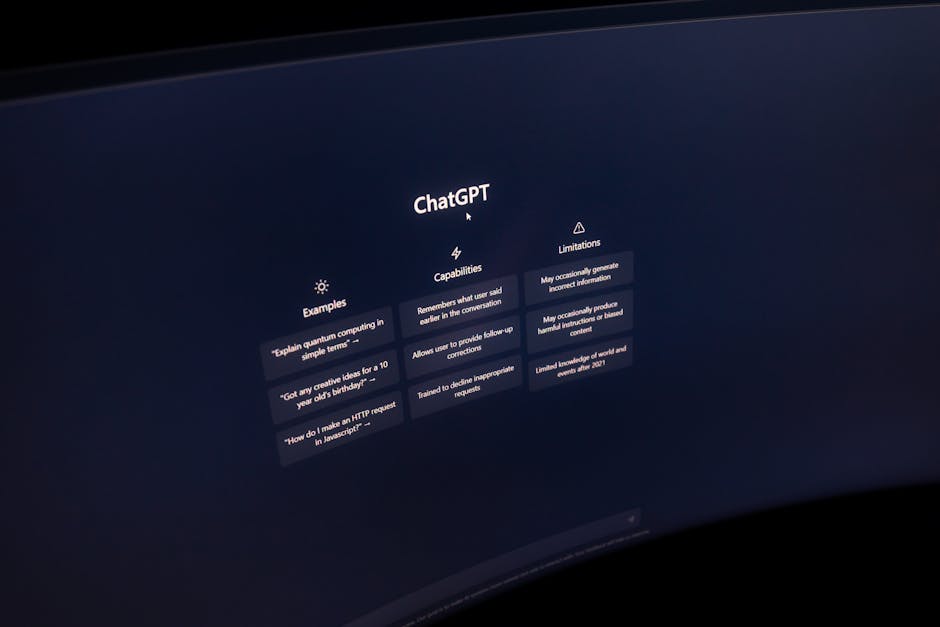
If you don’t have a corporate style guide, you are effectively operating in a vacuum. The goal isn’t to write a 50-page manual; it’s to establish tone rules that keep your content from sounding like a generic corporate press release. Remember: if the voice is overly formal or vague, the learner will check out. If the AI is too confident in a wrong answer, the learner will be misled. Your job is to act as the "truth filter" between the model and the learner.
Risk-Based QA: Why Everything Can’t Be Treated Equally
I have seen teams waste weeks reviewing internal trivia quizzes with the same rigor they apply to sexual harassment compliance modules. Stop doing this. Use a risk-based QA framework to decide where your limited time is best spent.
Risk Level Content Type Validation Focus Review Depth Low Quick-reference guides, icebreakers, low-stakes tips Tone, clarity, basic formatting Self-check + peer review Medium Standard process training, product updates Accuracy, consistency, pedagogical structure ID review + SME spot check High Compliance, safety protocols, legal/HR policies Strict fact-checking, source verification, auditability Full SME sign-off + legal/compliance auditFor high-stakes content, I never trust an AI to cite its own sources. If it says, "According to the 2024 handbook," I check that handbook. If it can't find the source, the AI is effectively guessing. For low-stakes content, focus on your consistency checklist—ensure you are using the same terminology for the same concepts throughout the document, which is the most common place where AI-generated content falls apart.
Building a "Lightweight Style Guide" on the Fly
You don’t need an expensive agency to define your brand voice. When you are working with AI, you can build your style guide incrementally. I suggest creating a simple, one-page document that covers the following "non-negotiables":
- Vocabulary Bank: A list of preferred terms vs. forbidden terms (e.g., "Learner" instead of "User"; "Module" instead of "Course"). Tone Rules: Define your brand voice in three adjectives. If my current project is "Direct, empathetic, and action-oriented," I tell the AI, "Rewrite this in an empathetic, direct, and action-oriented tone." Formatting Standards: How do you handle acronyms? (Do we introduce them in parentheses on first mention?) How do you handle lists? (Bullet points only, or nested numbered lists?) The "AI-Smell Test": A list of phrases to avoid. I personally hate "In today’s fast-paced environment," "unlock your potential," and "essential toolkit." If the AI uses these, it gets an immediate rewrite.
The Art of Targeted SME Review
Nothing annoys me more than sending an SME a document and asking, "What do you think?" That is how you get feedback like "looks good to me" while leaving dangerous inaccuracies buried on page four. To get efficient, high-quality feedback, you must curate the SME’s experience.
When sending content to an SME, include a cover note that directs their attention. Instead of "What do you think?", ask:
"Are there any specific process steps that are missing or outdated?" "Do these examples accurately represent the complexity of the task a learner will face?" "I’ve used [Term X] to describe [Concept Y]. Does this align with our internal documentation?"By forcing the SME to look at specific points, you are essentially "breaking" the content for them, much like I try to break my own assessments by acting like the most distracted learner in the room. If they can’t answer the question easily, the copy isn’t clear enough.
Final Thoughts: Don't Trust, Verify
AI is a tool, not a teammate. It does not understand the nuances of your business culture, and it certainly does not care about your learners as much as you do. When you are operating without a formal style guide, your role as an ID becomes even more vital. You are the architect of the content’s quality.

Create your consistency checklist, be ruthless about removing fluff, and never—ever—assume that because the content looks "clean," it is correct. Validation isn't a chore to be checked off; it is the most important part of the instructional design process. If you find yourself tempted to hit reddit "Publish" because the AI did 90% of the work, remember: that last 10% is where your learners will either succeed or fail. Stay diligent.
And if you find a particularly egregious AI hallucination in your work? Write it down. Your "gotchas" doc will become your most valuable training resource for the next time you prompt the bot.